- Implementing small synth settings to shape movement
- How tuning systems influence character
- When to use spatial effects to guide the emotion
- Why reverb shaping affects clarity
- Presets as starting points
OTIOT speaks directly throughout this feature and explains how he approaches production with a clear sense of who he is and where his ideas come from. His writing draws on Middle Eastern scales, personal history, and the years he spends shaping his ear on tour under earlier aliases. “Amantra” follows that same thread.
The track forms around a focus on tone, movement, and the details that connect his musical background to his current workflow.
He speaks about leaning on digital instruments that provide scale control, pitch sensitivity, and fluid movement between notes. These tools shape the pluck line that moves through the track and give him the control needed to adjust each transition from note to note. Spatial effects play a key part as well, adding air and motion that support the overall feel.
This edition of Producer’s Toolbox breaks down the instruments and effects behind “Amantra” and shows how each decision feeds into the final result. The workflow reflects the same approach OTIOT brings to his wider catalog, built on practical technique, scale-focused writing, and a tone palette formed through years of steady exploration.
Serum 2 by Xfer
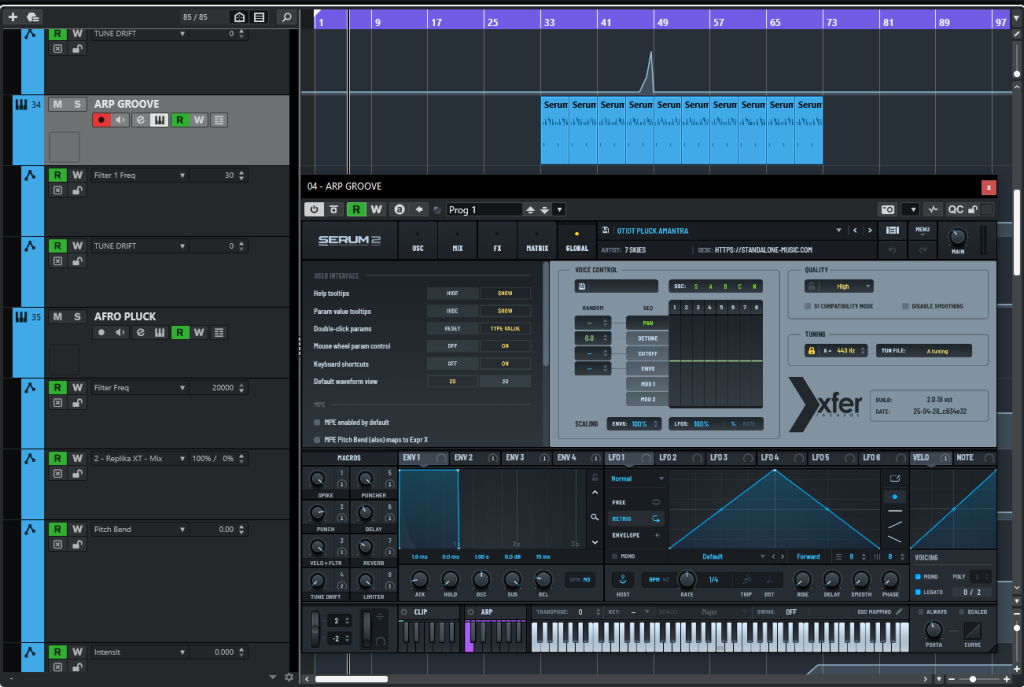
The first VST instrument we’ll talk about is, of course, Serum 2 by Xfer. Serum is basically a digital synthesizer with its own special color. I usually like to use Serum to make plucks or a certain sound with FM.
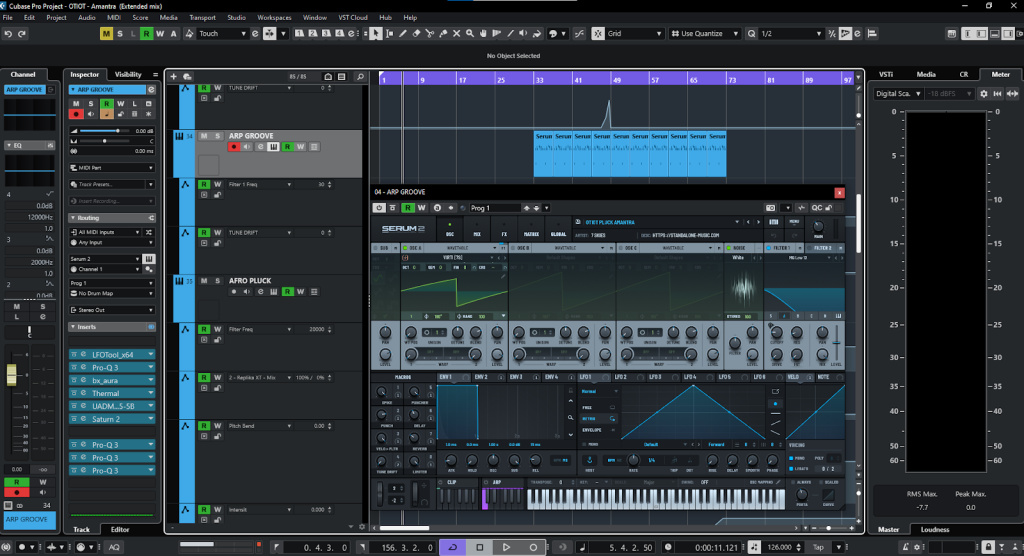
In my track Amantra, I wrote a Pluck Arpeggiator, and what makes the sound so special is the Portamento knob. When I opened it, the sound slid in pitch to the next note, which made it really unique.
One of the things I like most about Serum, and use a lot, is the micro-tuning option. That way, I can actually play an Arabic scale or any other custom scale.
bx_aura by Brainworx
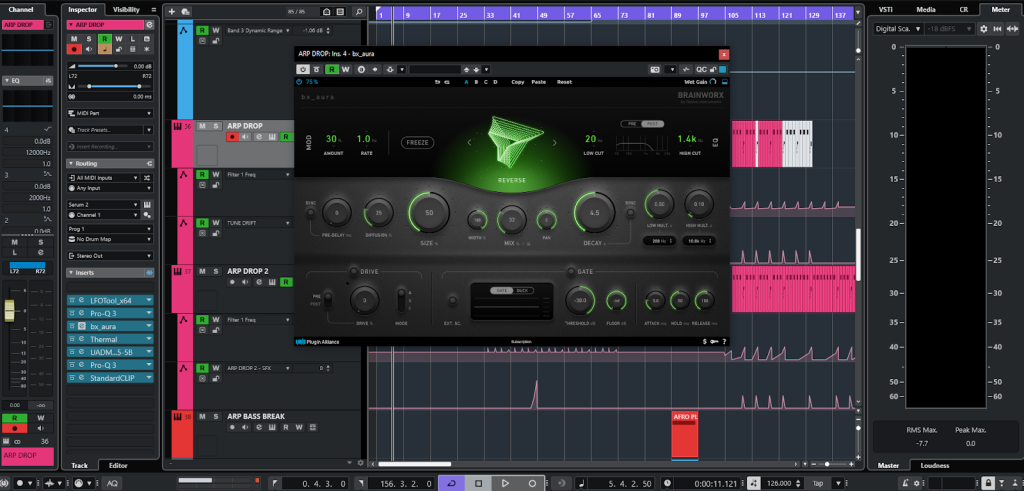
The second VST I want to talk about is bx_aura by Brainworx. It’s an effect device that simulates reverb and delay.
I use bx_aura in all my projects and on many channels. I usually work with it on the Reverse preset, which basically simulates a kind of delay but in reverse. bx_aura is even on the Pluck Arpeggiator I mentioned above.
If you try to take a single sound and put bx_aura on the Reverse preset, you’ll immediately feel the magic. I also like that there’s an EQ in bx_aura, so you can choose which frequencies you want to affect more or less.
Pro-R by FabFilter
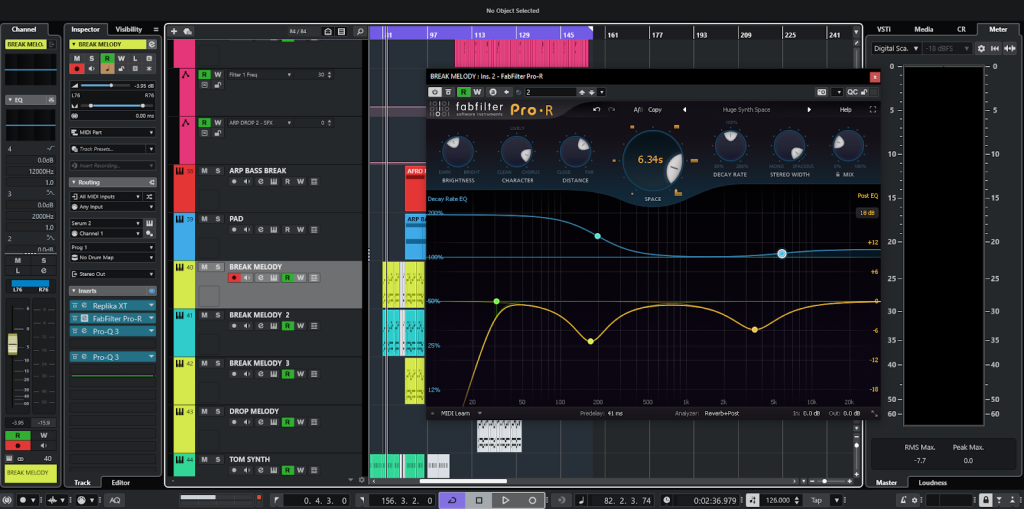
The third VST that must be talked about is Pro-R by FabFilter, which is actually a reverb.
This is one of the reverbs I love working with the most — it’s in almost every project I have. In most cases, I use a preset called Huge Synth Space, which gives the sound a massive, dreamy atmosphere, almost like a shimmer.
If you take any sound, even the smallest one, and apply the Pro-R with this preset, you’ll instantly get depth and dreaminess.
The most important things in Pro-R are the ability to EQ the reverb, and the Brightness knob, which allows you to soften the sound and make the reverb warmer, deeper, and more pleasant instead of metallic and cold. With these two tools, I adjust the color and texture of the reverb to the chosen sound so that everything blends into one harmonious, unified tone.
The Big Takeaway?
OTIOT’s choices here make the process feel grounded and intentional.
You see how each tool fits into the way he writes, from the pitch movement in his arps to the scale control that ties back to his background. Nothing feels added for the sake of it. Every move supports the identity he has built through years of refining how he approaches melody, tuning, and space.
The takeaway for readers is straightforward. When you understand why an artist reaches for certain tools, you get a clearer picture of how their workflow shapes the outcome. OTIOT’s approach shows how familiarity with a small set of instruments and effects can lead to results that line up with your vision every time. It encourages producers to study their own habits, find the controls that matter most in their sessions, and build a process that grows with them.